Dive Brief:
- Banks are falling short on addressing the rising methane emissions being generated by 15 of the highest emitting meat, dairy and rice companies, according to a new report from nonprofit think tank Planet Tracker. The report surveyed 25 banks that provide and facilitate financing for these companies, including JPMorgan Chase, HSBC, Barclays, RBC and Citibank.
- Only two of the banks that financially back these companies — which collectively generate around 1.3 million metric tons of methane emissions annually — include agricultural sector emissions in their climate targets, according to the report. By contrast, all of these banks have targets for reducing emissions from other high-emitting sectors.
- Barclays has targets for dairy and livestock sectors in the U.K., while Dutch banking and financial services provider Rabobank has targets for 10 agricultural sectors and a pledge to “significantly reduce” methane emissions by 2050. However, both banks lack a specific medium term (e.g., by 2030) methane emission reduction target, according to the report. Planet Tracker found that no other bank included methane emissions in its climate targets.
Dive Insight:
Methane is responsible for roughly 0.5 degrees Celcius, or 30%, of current global warming since the industrial revolution, and emissions are rising at the same rate as those of carbon dioxide.
Because it is more than 80 times more potent than CO2 over 20 years, methane is the fastest lever available for slowing near-term heating, the report said. Additionally, its short atmospheric life, of around 12 years, means that reductions in methane lead more quickly to a decline in atmospheric concentrations, the report noted.
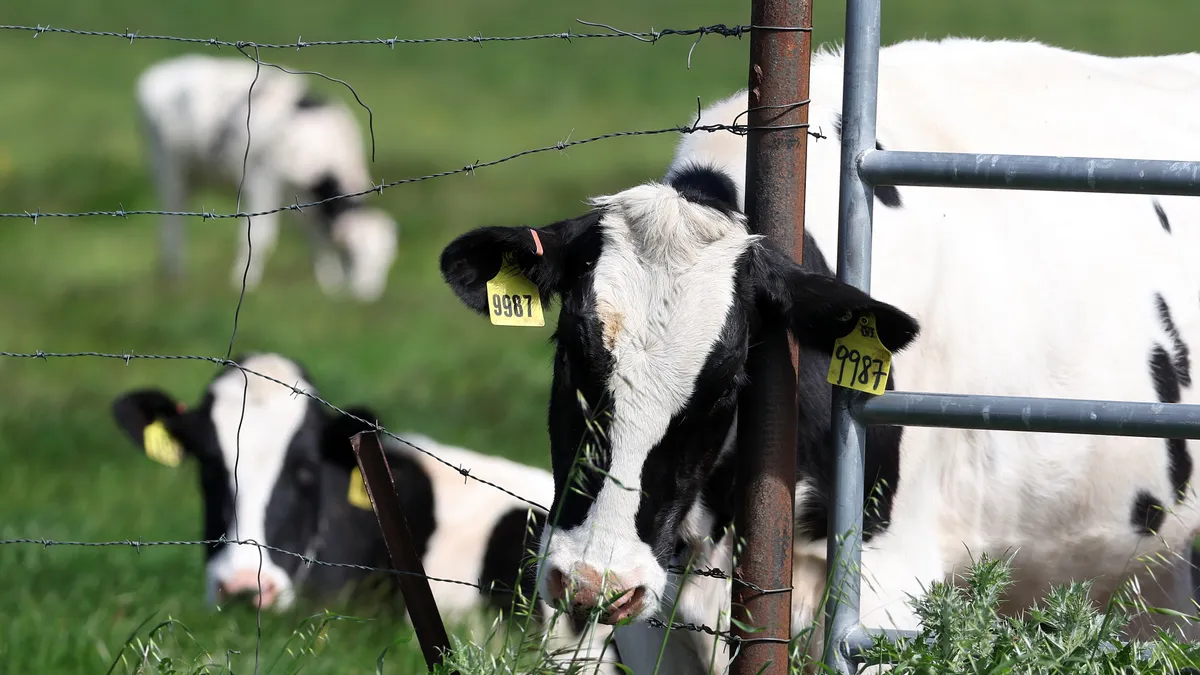
Agriculture, including livestock and rice, generates around 40% of methane emissions, more than fossil fuels, per the report. The report analyzed the financing of 15 of the largest meat, dairy and rice companies, which together account for 7% of global agricultural methane emissions.
Brazilian multinational JBS contributes about three times more methane than the next most polluting company, Marfig, making it the single biggest agricultural methane polluter globally, the report found.
The 25 banks surveyed provided lending and underwriting worth $159 billion in total to these agri-food companies, according to the report. JPMorgan, HSBC, Santander, RBC and Barclays are the top five in terms of volume of lending and bond facilitation.
Planet Tracker said that while lending directly to companies appears on the banks’ balance sheets, facilitating finance by arranging bond issuance or syndicating loans does not appear on balance sheets.
But most banks — except for JPMorgan, Barclays and Citi — have sustainability targets, including greenhouse gas emission targets, that only cover direct lending, not facilitating. This means that banks can maintain their targets while facilitating debt for polluting customers without triggering any disclosure requirements, according to the report.
In fact, bonds account for 96% of total debt of these companies, the report estimated. The latest Partnership for Carbon Accounting (PCAF) standard recommends including both financed and facilitated debt when considering borrowers’ scope 3 emissions.
Only Rabobank sets explicit agricultural methane targets, but its approach remains limited to financed emissions, the report found. And while a total of 12 banks partially or fully recognize methane as a distinct driver of climate change, no bank besides Rabobank has methane reduction targets.
This absence is mirrored by sustainability standards, as most standards don’t cover the agricultural sector in companies’ scope 3. The GHG Protocol, the most widely used standard, does not currently require require scope 3 emission disclosure and does not include facilitated emissions. Planet Tracker estimated that the standard therefore captures less than 1% of greenhouse gas emissions from banks’ food processing clients.
Because agriculture produces such a large share of methane emissions, “banks should use their leverage to reduce these emissions by restricting or withdrawing finance from companies that fail to act,” report author Ailish Layden said in an April 16 press release.
Planet Tracker recommended that, to avoid climate, regulatory, and reputational risks, banks should recognize methane as a material financial risk and set quantitative methane targets that include borrowers’ scope 3 emissions, covering both financed and facilitated lending.