
Dive Brief:
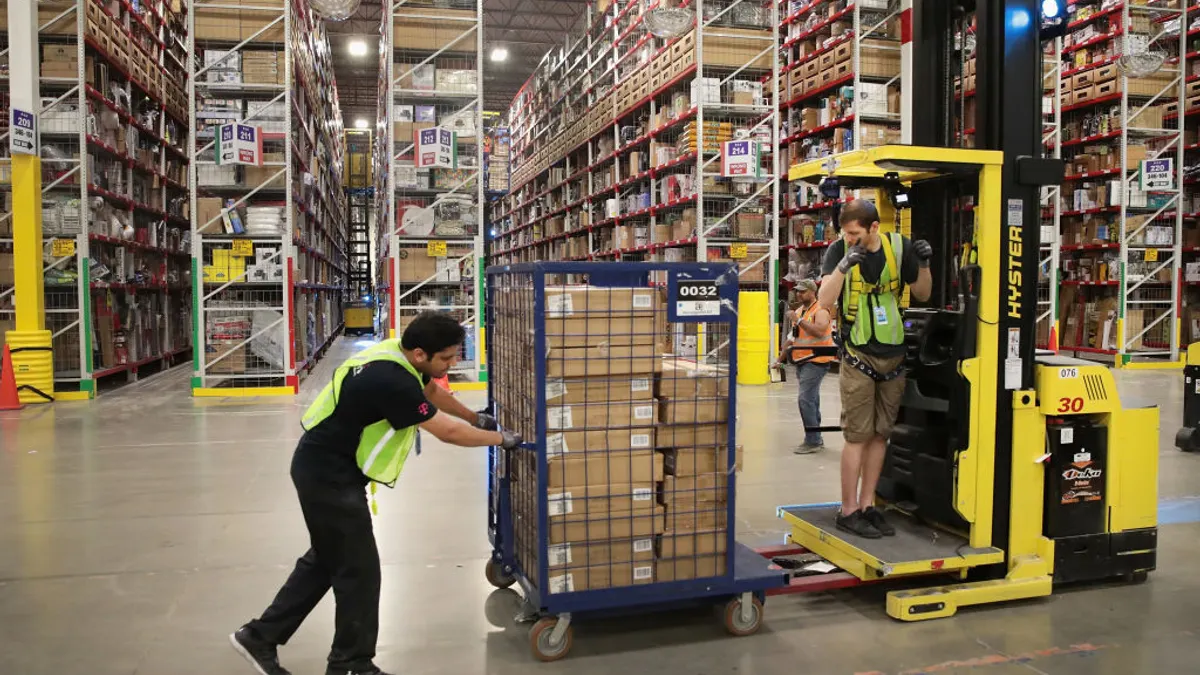
- Amazon reduced energy use in its grocery fulfillment centers by nearly 15% as part of a pilot program at three facilities with climate technology firm Trane Technologies, according to a Dec. 1 press release.
- The e-commerce giant deployed Trane Technologies’ BrainBox AI tool, in conjunction with Amazon Web Services, at three grocery fulfillment sites in North America. The BrainBox system autonomously adjusts temperature control and ventilation systems to reduce energy consumption and carbon emissions.
- Following the pilot, Amazon now plans to deploy the platform across more than 30 sites within its grocery fulfillment and distribution network in the U.S. and install the tool in stores in 2026, per the release.
Dive Insight:
Amazon is leveraging new technology to support a deeper push into the grocery space while pursuing sustainability targets.
“At Amazon, we’re continually looking for data-driven, scalable solutions to reduce our carbon footprint while maintaining operational excellence,” said Christina Minardi, VP of worldwide grocery stores real estate and store development at Amazon, in the release.
The company is targeting carbon neutrality across its operations by 2040, according to its website. However, its carbon emissions increased 6% year over year in 2024, per its most recent sustainability report. The hike came after Amazon recorded a 3% YoY reduction in 2023.
“By working with Trane Technologies and the BrainBox AI team, we’re turning our buildings into intelligent systems that learn and adapt, helping us meet both our sustainability and performance goals in real time,” Minardi said.
Meanwhile, the company is piloting the use of an in-store micro-fulfillment center within a Whole Foods Market store in Plymouth Meeting, Pennsylvania, further entangling the e-commerce giant’s overall business with its grocery arm’s operations.
The company is also leaning on its logistics network to provide more grocery shipping options for shoppers, including expanding same-delivery for perishable items to more than 1,000 cities and towns earlier this year.