Dive Brief:
- The “green economy” surpassed $5 trillion in annual value in 2024 and is projected to top $7 trillion annually by 2030, according to a new report from the Boston Consulting Group and the World Economic Forum.
- The Tuesday report classified the green economy as “commercial solutions with a clear environmental purpose or solutions that are a direct response to environmental challenges,” which included activities focused on mitigation, adaptation and resilience.
- “Recent geopolitical developments, energy security considerations and short-term economic pressures have shifted the conversation on climate action,” the report said, but added that actual investments in sustainable solutions have continued to increase.
Dive Insight:
The green economy, as defined by the report, was the second fastest-growing industry in the decade since 2015, behind only technology. More than half of the global emission mitigation needed by 2050 — 55% — can be achieved through “competitive methods,” with another approximately 20% of emissions that can be addressed at a “minor cost disadvantage,” the report said.
“This year’s report is a reminder that the green economy continues to represent one of the biggest growth opportunities on the planet,” WEF Executive Committee Head of Climate and Nature Economy Pim Valdre and BCF Managing Director Patrick Hernold said in the report’s foreword.
“Recent headlines may suggest that the climate transition is stalling,” Valdre and Hernold wrote. “Yet, overall growth in the green economy has not wavered. On the contrary, investments in green technologies keep jumping from record to record.”
The report examined the green economy through seven areas of adaptation and resilience: food, infrastructure, health, business and community, water, energy and biodiversity. Mitigation was analyzed by looking at energy supply and optimization; industrials and buildings; transportation and mobility; food, agriculture and land use; carbon and methane management; circularity and waste management; and financial and enabling solutions.
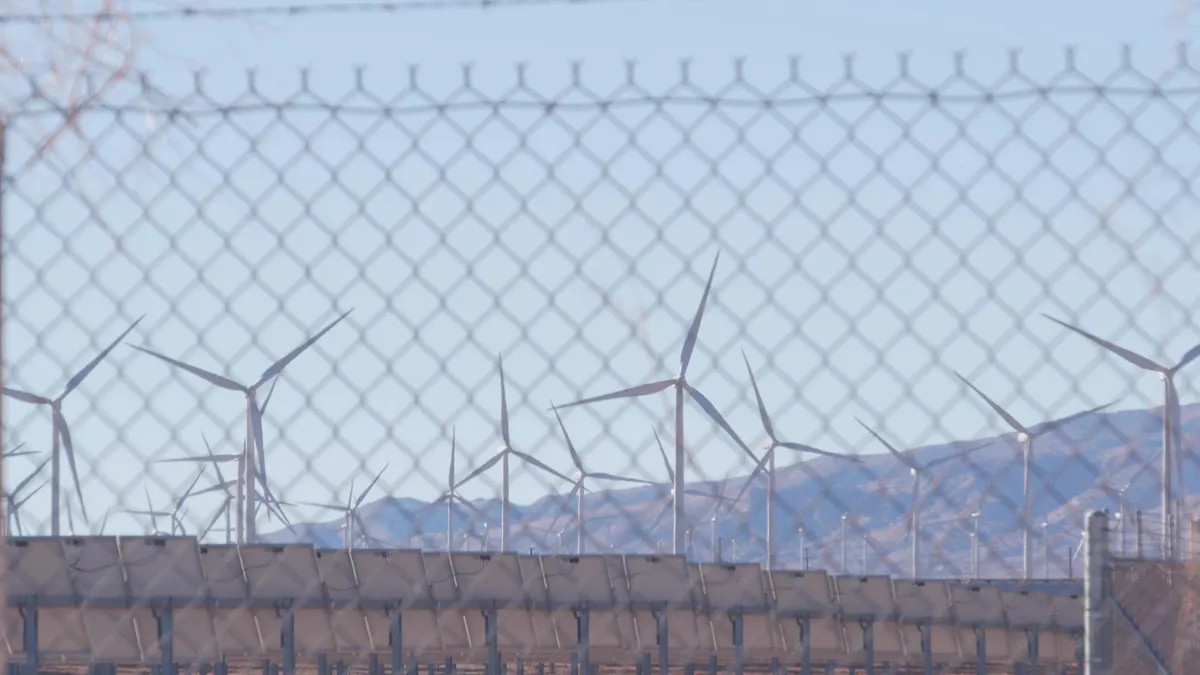
The report found that solar, wind, nuclear and hydropower energies are cost-competitive “in most situations or soon-to-be” power and heat decarbonization solutions that can address 35% of the emissions needed to be abated by 2050 to keep global warming within 1.5 degrees Celsius. The report also pointed to other cost-competitive decarbonization methods, like passenger battery electric vehicles, industrial energy and material efficiency and fluorinated gas alternatives; building energy efficiency and renovation; and biogas from municipal solid waste facilities.
“Renewables constitute one of the biggest global greentech markets, but they are not alone,” the report said. “Outside of renewable power generation, the growth of renewables has accelerated electrification, which in turn has enabled many other technologies (e.g. heat pumps, electric mobility) to scale up.”
About 20% of global greenhouse gas mitigation needed by 2050 comes at a “major cost disadvantage” currently, including carbon capture and sequestration across multiple sectors, biochar, direct air capture, hydrogen and low-carbon fuels for trucking, aviation and shipping, BCG and WEF said. Overall, this reflects the market for decarbonization technologies and solutions needed for hard-to-abate sectors growing at a much more uneven rate.
Low-carbon hydrogen, CCUS and biofuel technology markets are all growing on an estimated trajectory well below what’s needed to keep global temperature rises below either 2 degrees Celsius or 1.5 degrees Celsius, according to the report.
The report also includes case studies from the WEF’s Alliance of CEO Climate Leaders and lessons for CEOs looking to grow their business in the green economy. The report recommends CEOs “personally champion” their green ambitions; align the company’s “purpose and strategy with value creation;” invest in R&D and early pilots to “future-proof” the market; manage financial expectations proactively; and “overcome silos early.”
The report from BCG and WEF is a follow-up to a 2024 report from the two groups that examined the climate risks that CEOs and companies bring through inaction. That December 2024 report found that climate-related disasters had led to more than $3.6 trillion in damages since 2000.