John Mitchell is president and CEO of the Global Electronics Association, the world’s largest trade association for companies across the electronics ecosystem. Views are the author’s own.
Semiconductor facilities in Taiwan — the current epicenter of global chip production – need to truck in water from external watersheds just to keep assembly lines moving. Forty percent of existing global semiconductor manufacturing capacity and up to 40% of all facilities currently under construction will face high to extremely high water risk by 2030, according to industry data.
This water problem signals a growing challenge for the electronics industry: the physical impacts of climate change are increasingly affecting operations and supply chains. This does not happen in a vacuum — rather, it compounds geopolitical and logistical vulnerabilities across the supply chain.
The electronics industry remains hyper-dependent on specific geographic hotspots for both raw materials and resource-intensive processing. When virtually every sector depends on these components, geographically contained crises trigger immediate worldwide volatility.
As shipping ground to a halt in the Strait of Hormuz over the past seven months, component prices spiked rapidly, with copper foil rising by 30% and printed circuit boards going up 40%, according to reporting by Reuters. Whether driven by climate-induced resource scarcity or geopolitical bottlenecks, these compounding shocks expose a vulnerability we must address.

While there is no single solution to solve every supply chain challenge at once, industrial artificial intelligence, which applies AI to manufacturing operations from factories to energy grids, is designed specifically for complex operational environments. This technology can safeguard the supply chain by changing how we respond to external shocks in real time.
If a drought threatens a chip facility’s water supply, industrial AI can optimize production lines to run on fewer resources. If military conflicts close a shipping lane or cause critical mineral costs to spike, industrial AI has the capability to diversify sourcing intelligence to find alternative routes and materials. By reducing primary material demands and increasing resource efficiency across the board, industrial AI can build an operational buffer that directly insulates companies from global instability.
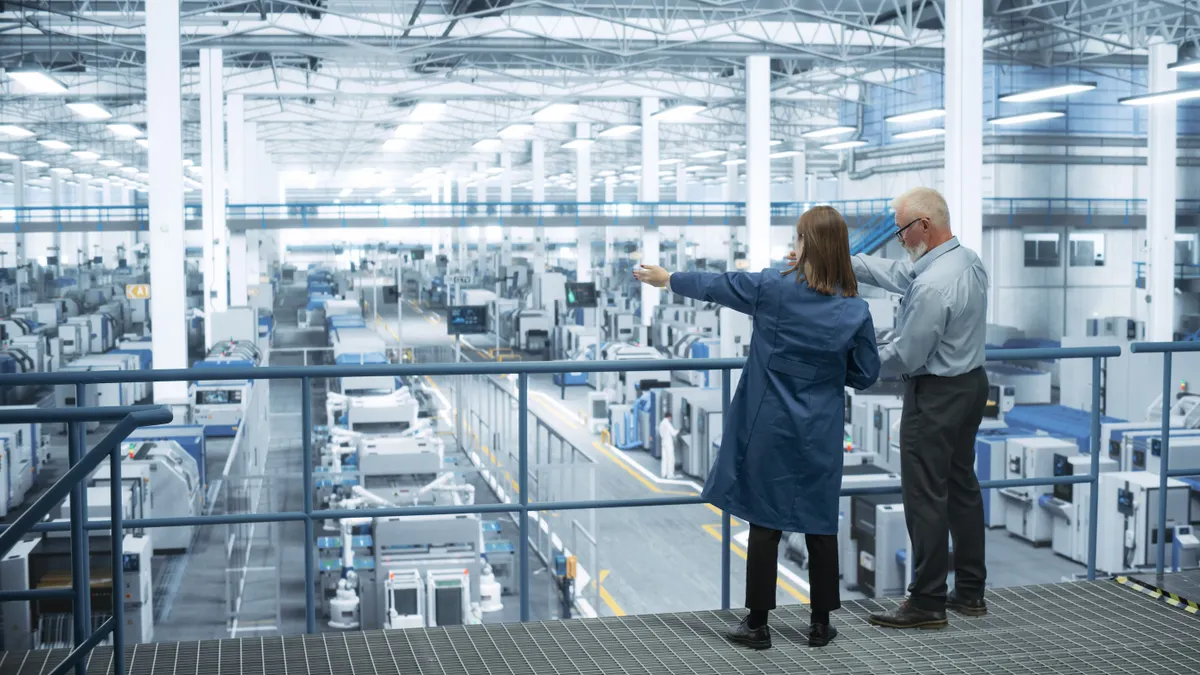
Industrial AI is already helping the electronics industry — from real-time factory planning and optimization to resource forecasting and AI “factories” with extensive electrification infrastructure. For instance, world models, also known as digital twins, are being used to actively simulate severe market disruptions and climate events. This application gives manufacturers the predictive intelligence needed to certify backup suppliers and adjust material volumes weeks before a crisis hits. Global Electronics Association member companies are reporting their deployment of industrial AI for quality control, predictive maintenance, sustainability reporting, carbon data collection and designing for circularity.
These use cases are part of a broader shift of companies using industrial AI to build operational insulation. A recent corporate survey from Siemens reports that 65% of respondents integrated industrial AI into manufacturing to save energy and 43% used the technology to better manage resources and waste. In a supply chain where energy price spikes and resource scarcity are triggered by events nearby or thousands of miles away, that kind of operational insulation can be a sustainability win and competitive hedge. These applications of industrial AI enhance companies’ strategic interdependence, creating a supply chain that bends under pressure rather than breaks.
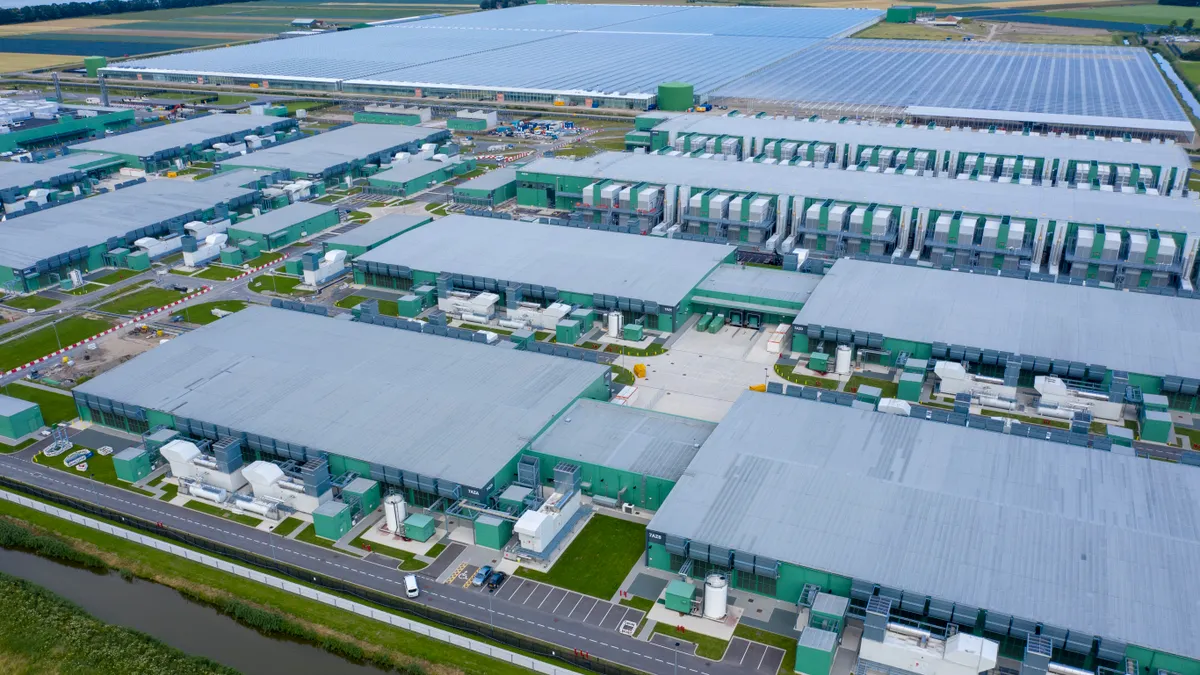
However, there is also a need to confront the infrastructure required to build this operational resilience. The algorithms powering industrial AI models currently require massive data centers, which carry a large resource footprint of their own.
Global data center electricity consumption has grown 12% per year over the last five years, according to the International Energy Agency. U.S. data center electricity consumption is projected to increase 300% over the next decade. As the world enters an era of water bankruptcy, data centers are anticipated to consume 9.3 trillion liters of water by 2030, according to research by the U.N.
At the moment, the choices made about the fuels needed to power digital backbones accelerate extreme climate conditions and geopolitical energy dependencies that are already fracturing supply chains. That is an operational contradiction the industrial sector can no longer afford.
Industrial AI adoption must be guided by dual accountability. AI should accelerate sustainability by optimizing resources, reducing waste, improving energy efficiency, and scaling supply chain decarbonization. But the digital infrastructure that powers AI must also be sustainable — a challenge many across industries are working on.
Circular water practices, waste recovery and a commitment to 100% clean energy sourcing are the baseline for companies serious about employing industrial AI as a net-positive resilience tool.
The electronics industry has a unique role to play in creating this virtuous loop. Electronics are the foundation that makes AI possible, and AI can also become a powerful tool to make electronics design, manufacturing, use and end-of-life management more circular. In short, better electronics can make AI more efficient. AI can make electronics more sustainable, and more circular electronics can reduce the material and energy burden of building the next generation of AI hardware.
The electronics industry sits at the center of both the challenge and the solution because it influences the technologies that enable AI and the industrial systems where AI can deliver sustainability gains – and it’s an intersection more COOs, CFOs and CSOs should pay attention to.
Resilience and sustainability are not competing priorities. Industrial AI, for example, can help scale sustainability while simultaneously driving operational and financial resilience needed to safeguard industry against global market instability.