Dive Brief:
- Nike has signed a virtual power purchase agreement with general trading company and investment firm Mitsui & Co. to power its Japan operations with clean energy.
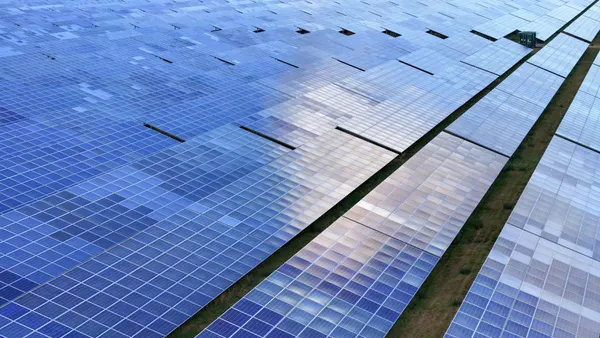
- Under the agreement, announced last week, Mitsui and its project solutions-focused subsidiary will supply the Nike Japan Group with renewable energy certificates generated from 16 domestic solar plants located in the Tokyo Electric Power Company Power Grid area. The grid provides electricity to several densely populated and high-demand regions, including Tokyo.
- The deal will allow Nike Japan to meet 100% of its electricity needs for its operations and facilities in the country with renewable energy, including its distribution centers, offices and stores, according to a Feb. 19 release.
Dive Insight:
The deal covers 18 megawatts of power, including 3 MW generated through new solar projects and 15 MW through recently launched projects, per the release.
The renewable energy or Non-FIT Non-Fossil Certificates issued through this deal are specific to Japan and are mainly used by energy supply business operators — like electricity retailers and gas utilities — to meet compliance targets outlined in the country’s Act on Sophisticated Methods of Energy Supply Structures.
The law aims to reduce the country’s reliance on imported fossil fuels, cut overall carbon dioxide emissions and mandates specific targets on increasing the use of non-fossil energy sources, like renewable and nuclear power. The Non-FIT Non-Fossil Certificates verify that electricity was produced without burning fossil fuels.
“Partnering with Mitsui to cover our facilities with 100% renewable electricity reflects Nike’s commitment to advancing responsive, resilient, responsible, and efficient operations,” Nike Japan Vice President and General Manager Tetsuji Kobayashi said in a statement last week.
Nike will use the agreement to decarbonize its operations and work toward its sustainability goals. The company has a science-based target to cut its carbon footprint by 2030, which includes a 65% reduction across its own operations — scope 1 and scope 2 emissions — and a 30% reduction across its supply chain — scope 3 emissions — compared to a 2015 baseline.
The athletic footwear and apparel brand said it sourced 96% of the electricity it consumed across its global operations in the fiscal year 2024 from renewable electricity.