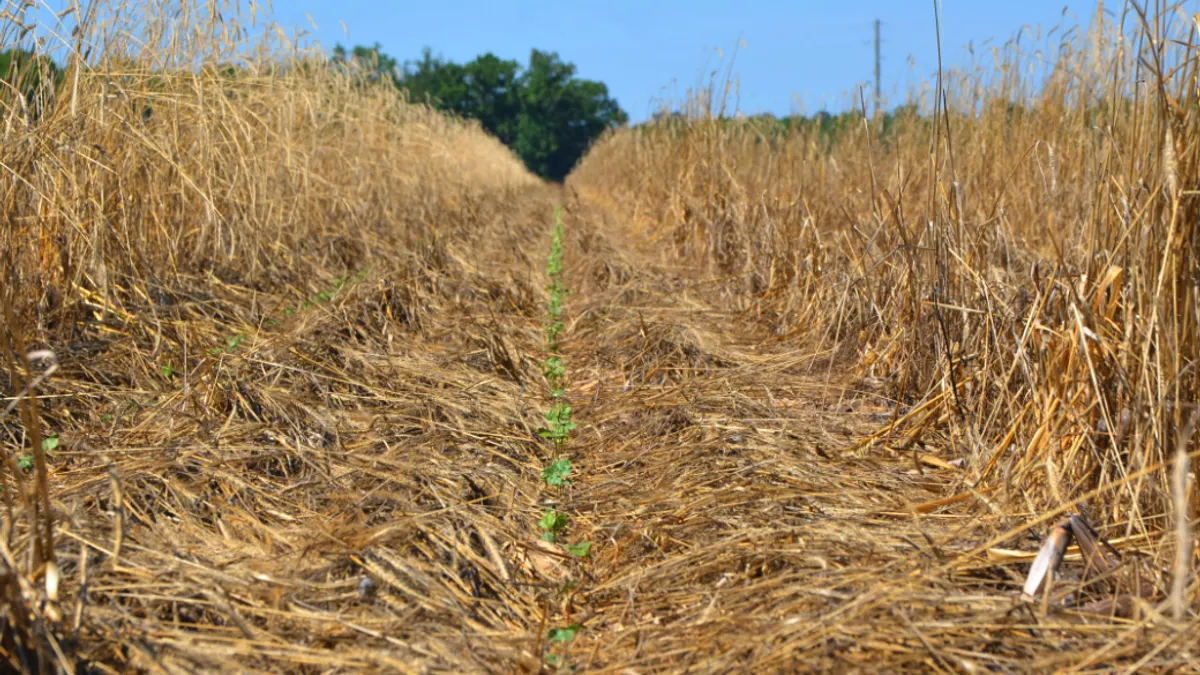

Farmland is an important natural resource that supports food production, rural economies, biodiversity and local communities. However, agricultural land faces increasing pressure from soil degradation, water scarcity, extreme weather, development and changing climate conditions. Conservation practices can help farmers protect the long-term productivity of their land while reducing environmental impacts. These practices are also increasingly connected to Environmental, Social and Governance (ESG) principles. The ESG Framework provides organizations with a structure for evaluating how their activities affect the environment, society and the way an organization is managed.
Conservation on farmland is more than an environmental issue. It can influence economic performance, community well-being, producer livelihoods, regulatory compliance and corporate reputation. Businesses that depend on agricultural products or operate within rural communities can incorporate farmland conservation into their broader ESG strategies. By doing so, organizations can support environmental stewardship while also strengthening relationships with farmers, communities, customers, investors and other stakeholders.
The environmental importance of farmland conservation
The environmental component of ESG focuses on how an organization affects natural resources and the environment. Farmland conservation directly supports this component because agricultural practices can have significant effects on soil, water, air quality, biodiversity and greenhouse gas emissions.
From an ESG perspective, conservation practices on farmland provide organizations with opportunities to establish measurable environmental objectives. For example, a company could track the number of acres managed using conservation practices, reductions in fertilizer use, improvements in soil health, water savings or changes in greenhouse gas emissions.
The social dimension of farmland conservation
Although conservation is often viewed primarily as an environmental issue, it also has a significant social component. Farmers and agricultural workers depend on productive land for their livelihoods. When soil becomes degraded or water resources become less reliable, agricultural communities can experience economic hardship.
Supporting conservation can therefore contribute to the long-term stability of farming communities. Companies that purchase agricultural commodities can work with farmers to encourage sustainable practices while providing technical assistance, education or financial incentives. Instead of placing all responsibility on individual farmers, businesses can share the costs associated with transitioning to conservation-oriented practices.
Governance and accountability
The governance component of ESG focuses on how organizations establish policies, make decisions, manage risks and demonstrate accountability. Farmland conservation can become part of corporate governance when organizations establish clear sustainability expectations and systems for measuring progress.
Governance is particularly important because sustainability commitments need measurable objectives and accountability mechanisms. A company could publicly report the percentage of its agricultural supply chain covered by conservation programs and establish specific targets for future years.
Measuring conservation as an ESG strategy
For farmland conservation to become an effective ESG initiative, organizations should establish measurable goals. Possible indicators include:
- Acres of farmland using cover crops or reduced-tillage practices
- Reductions in soil erosion
- Improvements in soil organic matter
- Reductions in agricultural water consumption
- Acres of protected wetlands, grasslands or wildlife habitat
- Greenhouse gas emissions associated with agricultural production
- Number of farmers participating in conservation programs
- Financial support provided to participating farmers
These measurements can help organizations evaluate whether their ESG programs are producing meaningful outcomes. They can also improve transparency for investors, customers, regulators, employees and other stakeholders.
Challenges and considerations
Despite its benefits, farmland conservation presents challenges. Agricultural conditions vary considerably by geography, crop, climate, soil type and farm size. A conservation strategy that works well in one region may not be appropriate in another. Companies should therefore avoid identical requirements on producers without considering local conditions.
Another challenge is determining who pays for conservation. If companies benefit from improved environmental performance and supply-chain resilience, it may be reasonable for them to help finance the transition. Partnerships among farmers, businesses, government agencies, nonprofit organizations (like RIPE) and financial institutions can distribute costs and provide farmers with additional resources.
Conservation practices on farmland can protect soil and water, support biodiversity, reduce environmental impacts and improve agricultural resilience. At the same time, they can strengthen rural communities, protect producer livelihoods and help businesses manage supply-chain risks.
From an ESG perspective, farmland conservation should not be viewed as simply an agricultural responsibility. Companies that depend on agricultural supply chains have a stake in maintaining healthy and productive farmland. By establishing measurable conservation goals, supporting farmers, engaging stakeholders and transparently reporting results, organizations can make farmland conservation an important component of their overall ESG strategy.
Ultimately, conserving farmland is an investment in both present and future stakeholders. Healthy agricultural ecosystems provide the foundation for food production and rural economies today while helping ensure that future generations have access to productive land and natural resources.