Dive Brief:
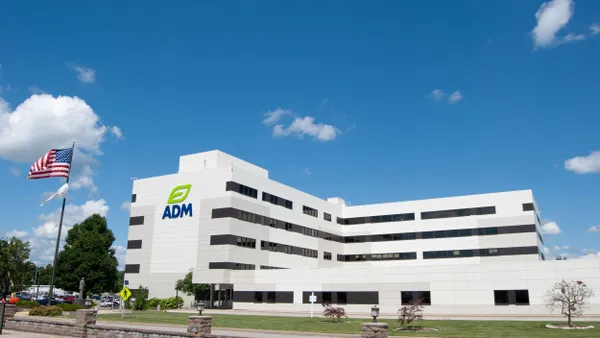
- Archer Daniels Midland, an agricultural supply chain manager and processor, announced Monday that it is planning to join the voluntary carbon market using credits generated by carbon capture at one of its corn processing plants.
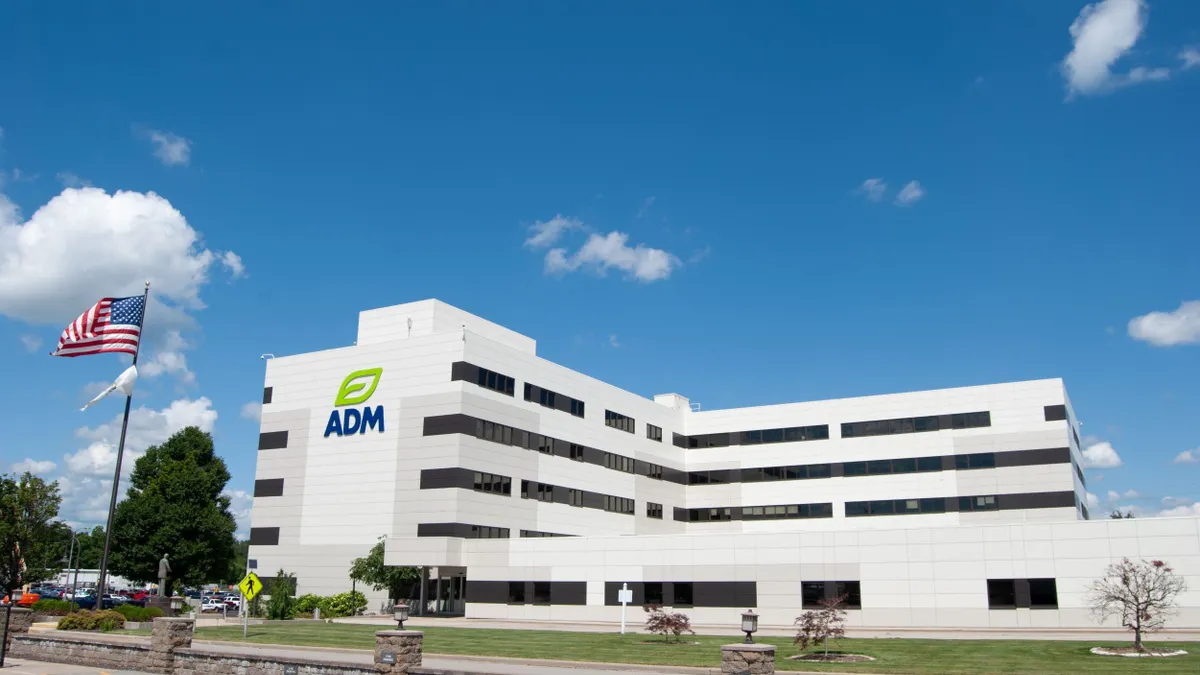
- ADM said the carbon capture and storage operations at its Columbus, Nebraska, corn processing facility will allow the company to enter the carbon market with an annual estimated capture capacity of over 800,000 tons, according to a press release.
- ADM began capturing carbon dioxide at its Columbus plant in November 2025 in a partnership with energy infrastructure company Tallgrass. The plant captures biogenic carbon dioxide during the ethanol fermentation process before being purified, compressed and transported for underground sequestration in Eastern Wyoming.
Dive Insight:
While this is the company’s first planned entry into the carbon market, ADM was the first U.S. company to operate an Environmental Protection Agency-permitted Class VI injection well, with its first carbon capture and sequestration well opening in Illinois in 2011. The company received a permit to open a second Illinois injection well in 2017.
The Columbus, Nebraska plant “is the largest bioethanol carbon capture facility in the world,” according to ADM. The company’s experience with its own injection wells, Tallgrass’ capabilities and other partnerships involved will allow it “to connect agricultural production with growing carbon removal markets at scale,” ADM Vice President of Innovation and Growth Kris Lutt said in the release.
“This substantial carbon removal offering will allow us to expand our efforts to new customers across multiple industries, from technology and finance to aviation and pharmaceuticals,” Lutt said. “More broadly, we view agriculture as a powerful engine to lower carbon, and our capabilities uniquely position us to help deliver for stakeholders across value chains.”
The credits will be verified and issued by carbon removal registry and certification infrastructure company Puro.earth, which is reviewing the credits for issuance under its methodology for Geologically Stored Carbon, according to the release. The methodology, last updated in 2024, covers carbon dioxide captured from the atmosphere or from biogenic materials — or generated from biological materials — that is then injected underground for permanent storage.
Puro.earth President Jan-Willem Bode said in the release that “the audit process has run exceptionally smoothly” for this project.
“Certifying carbon removal at this scale demands real rigor, and we believe ADM has approached every stage — from measurement and data collection through to third-party audit — with the discipline and transparency that an investment-grade market requires,” Bode said.
Once the certification and verification process is finalized, ADM plans to issue carbon credits from the facility over 15 years, according to the release.
Earlier this year, ADM partnered with pet food brand Hill’s Pet Nutrition to help increase the adoption of regenerative agriculture practices in the U.S. and Europe. The partnership will enroll 16,000 acres of corn and soybean fields across a pair of U.S. states, and 2,500 acres of soybean fields in Hungary over multiple years.
ADM previously announced in its 2025 regenerative agriculture report that it hit a 2025 goal to transition 5 million acres to regenerative agriculture practices a year early in 2024. The company said in its latest sustainability report, released in July, that it also met or exceeded interim 2025 goals to reduce its scope 1 and scope 2 emissions, energy intensity, water withdrawals and waste diversion.