Dive Brief:
- Archer Daniels Midland, an agricultural supply chain manager and processor, is partnering with pet food brand Hill’s Pet Nutrition to advance adoption of regenerative agriculture practices in the United States and Europe, ADM said this week.
- The partnership will enroll 16,000 acres of corn and soybean fields in Minnesota and Illinois and 2,500 acres of soybean fields in Hungary as part of a multi-year pilot program, according to the May 12 press release.
- ADM surpassed a 2025 goal to transition 5 million acres of farmland to regenerative agricultural practices a year early in 2024, according to its latest regenerative agriculture report.
Dive Insight:
The partnership aims to accelerate the adoption of regenerative agriculture practices and expand the practice to crops within the pet food value chain, ADM said. The initiative is designed to engage, educate and incentivize farmers to implement regenerative farming practices, and Hungary was chosen as a European location because it “serves as a key origin for ADM’s soybean sourcing,” the company said.
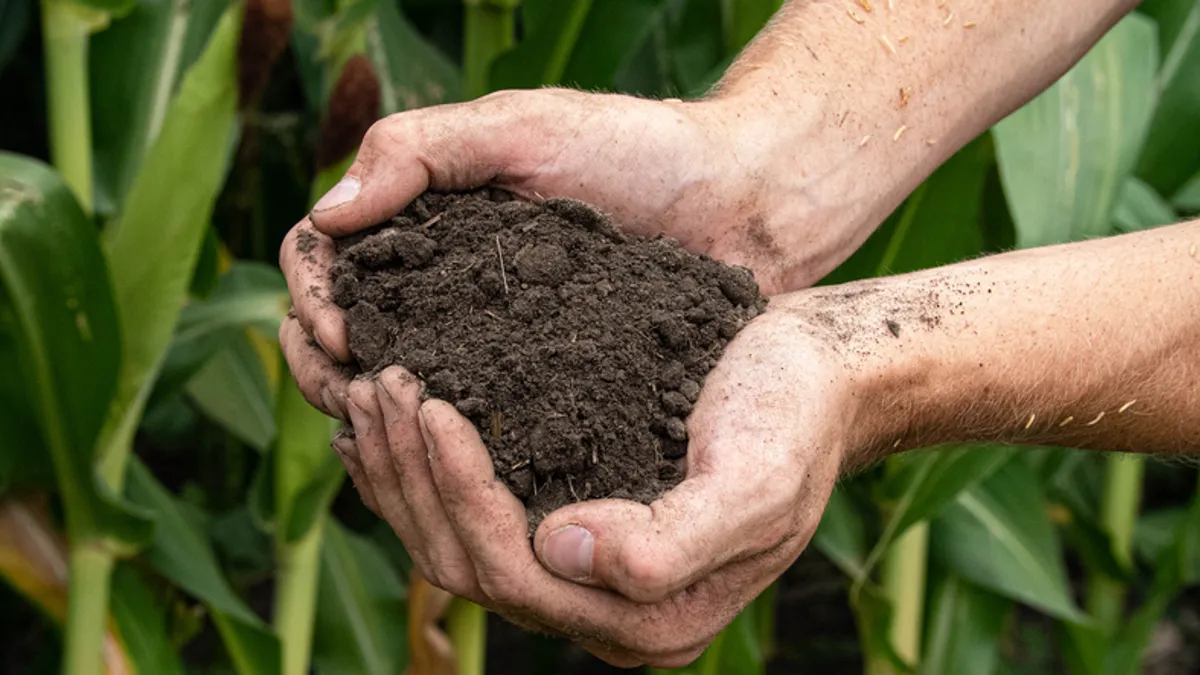
ADM looks at regenerative agriculture as “an outcome-based farming approach that protects and improves soil health, biodiversity, climate, and water resources while supporting market opportunities and increased value for farmers,” it said in its latest regenerative agriculture report. The company’s principles around the topic include responsibly managing inputs, continuously covering bare soil, minimizing soil disturbance, maximizing biodiversity and maintaining living roots in soil.
The partnership will serve “a growing demand from conscientious pet parents” for pet food that is sustainably sourced, Greg Morris, senior vice president and president of ADM’s ag services and oilseeds sector, said in the release.
“Farmers are at the heart of our pet food system, and this partnership enables us to support regenerative agriculture while sourcing high-quality ingredients grown with care for the land," Morris said.
Farmers who participate with ADM’s “re:generations” program will have financial incentives tied to their adoption of regenerative farming practices. The incentives are designed to offset costs of implementing the practices and to reward the changes.
ADM said it will also manage the data collection, field monitoring and outcome reporting to verify any environmental or economic impacts related to the changes, and will provide technical support, field education and peer networking opportunities for farmers.
Hill’s, based in Overland Park, Kansas, said in the press release that its “commitment to science-led nutrition … begins in the soil where [its] ingredients are grown.”
“Because grains like corn and soy are foundational to our recipes, partnering with ADM to support regenerative farming is a natural extension of our purpose of reimagining a resilient future for all people, their pets and our planet,” said Dave Baloga, Hill’s executive vice president of science and technology.