Dive Brief:
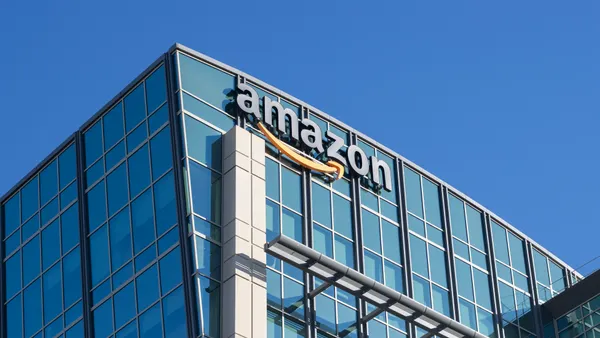
- Amazon is expanding the types of carbon credits available to companies — especially those within its own supply chain — through its sustainability hub in a bid to help them cut their greenhouse gas emissions, the company announced Tuesday.
- The e-commerce giant will now offer lower-carbon fuel inset credits, which are generated through the production of cleaner fuel alternatives like renewable diesel or biodiesel, enabling companies to lower the carbon footprint within their own supply chain by investing in such credits, per a Feb. 17 release.
- Amazon will also provide companies with super pollutant refrigerant destruction credits, which are derived from the destruction of super pollutants like methane and hydrofluorocarbons — gasses far more potent and harmful to the environment than carbon dioxide per ton.
Dive Insight:
Amazon said that companies can support the production of lower-carbon fuels through the LCF inset credits, even if they don’t have physical access to the fuels. Companies that invest in these can then get credit for cutting their related carbon emissions — if they still use fuels like diesel — by an amount that matches the inset credits they bought.
Carbon insetting refers to emission reduction projects embedded within a company’s own supply chain that primarily target cutting scope 3 emissions, whereas carbon offsetting relies on purchasing external, third-party credits to compensate for emissions.
Similarly, companies looking to cut their carbon footprint can also buy high-quality credits that fund the safe destruction of super pollutant refrigerant gases that would otherwise contaminate the atmosphere.
The expanded service is part of Amazon’s Sustainable Exchange, a platform the company launched in 2024 with the aim of sharing resources, training and playbooks for companies looking to meet their sustainability goals and enhance their decarbonization strategies.
Last year, Amazon announced it had started selling “high-integrity science-based” carbon credits through this exchange and had opened the credits to its U.S. supply chain partners, enterprise customers and signatories of The Climate Pledge. At the time, Amazon said the credits would only be available to companies that have net-zero targets for their scope 1, scope 2 and scope 3 emissions, measure and regularly report their greenhouse gas emissions and “commit to implementing decarbonization strategies in line with the latest climate science.”