Dive Brief:
- The number of data center projects cancelled in the U.S. more than doubled in the third quarter, compared to the same period last year, according to data released Tuesday from Relae, the climate solutions company formerly known as Carbon Direct.
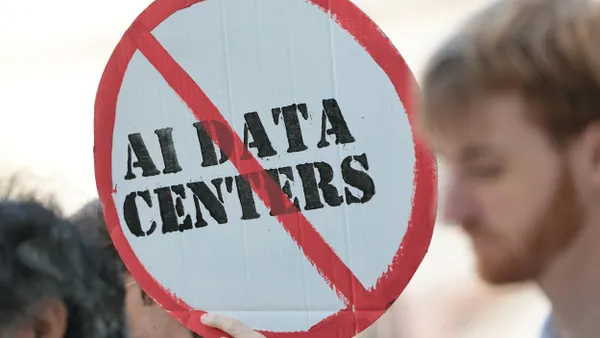
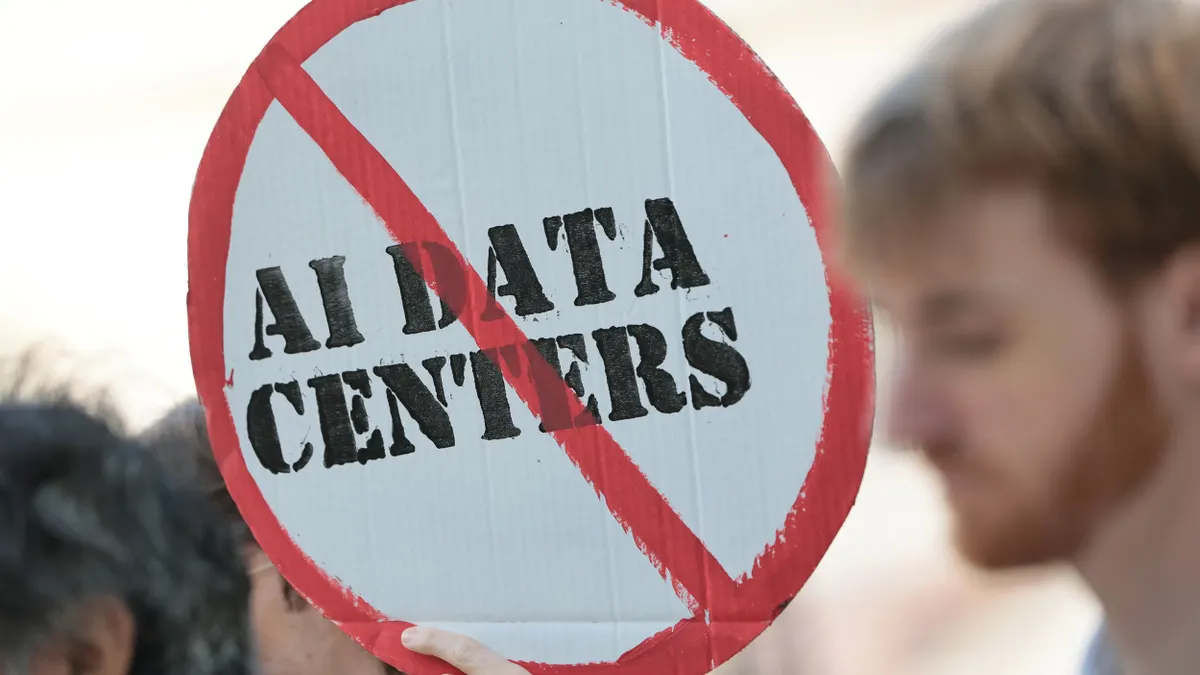
- Sixteen data center projects were stopped in the third quarter due to community opposition, Relae said in a blog post. That’s up from seven in the same quarter of 2025.
- Relae, which has a data center cancellation tracker, said there were 70 data center projects “blocked, withdrawn or stalled since 2024,” representing $271 billion in estimated or announced investments.
Dive Insight:
The rise in cancellations came amid an election season that saw data center pushback — along with affordability and geopolitical concerns — play a role in Democrats flipping both the House of Representatives and Senate.
Relae estimated that $64 billion in planned investments were stopped in Q3. Most of the projects were stopped by local governments, with seven stopped with formal denials and four being axed due to zoning bans. The other five projects were cancelled due to developer withdrawals, according to Relae.
Relae said three trends have emerged as data centers have drawn an increasing share of the public ire: “more cancellations, greater intervention by local governments, and the importance of transparency (or lack thereof) to communities.”
“At present, local opposition is not inherently a broad referendum on AI, although this could quickly change in the future,” Relae said in its blog. “Instead, our research shows that most community concerns are within a project team’s control.”
A lack of transparency represented the top concern for communities, representing a leading, or secondary, theme for 34 of 44 stopped projects that Relae analyzed.
Voters approved measures to restrict data center development in jurisdictions across 10 states, and an NBC exit poll found that 76% of voters opposed new data centers being built in their communities. The same exit poll found that 56% said data centers were a crucial or major factor in choosing a congressional candidate.
“Data centers have moved to the center of American politics,” Relae said. “As public views of the projects have turned more negative, they have become material for stump speeches, attack ads, and ballot measures.”
Of the 47 local ballot measures on data centers this past election, 46 passed that would limit or ban development, the firm said. The success of such measures “shows the growing significance of data center development as a local electoral issue,” Relae said.