Dive Brief:
- The number of companies linked to greenwashing incidents jumped 28% last year, accelerated by a surge in risk across sectors tied to the energy transition, according to a report from ESG research firm RepRisk.
- Sectors linked to the energy transition — alternative energy, mining, industrial metals, utilities and software and computer services — accounted for 29% of documented greenwashing incidents in 2026, up from 18% in 2022. RepRisk said it evaluates data for every annual report beginning July 1 and ending June 30 the following year.
- While greenwashing cases briefly fell in 2024, they have been on the rise in each of the past two years. The total number of greenwashing incidents has more than doubled over the past five years, RepRisk said in its report.
Dive Insight:
RepRisk documented 1,594 companies linked to greenwashing incidents in 2026 in its fifth annual greenwashing report released earlier this month, up from 1,243 companies linked to such incidents the year prior. The research firm said in the report that it had documented a 112% increase in greenwashing risk incidents since 2022.
The “transition to a low-carbon economy is creating a new greenwashing risk landscape,” the research and data firm said in an Oct. 6 press release. Transition-linked sectors have collectively increased their share of greenwashing incidents 11.4 percentage points over the past five years, while oil and gas has seen its share of greenwashing incidents fall 4.9 percentage points, according to the report.
“The transition is absolutely necessary and a huge opportunity. But what the report underscores is that it doesn't necessarily mean it doesn't come with risks and it doesn't come with trade-offs,” Alexandra Mihailescu Cichon, RepRisk vice president and global head of market development, told ESG Dive. “So something can be transition-enabling, but also is not necessarily impact-free.”
Mihailescu Cichon said in an interview that transition-linked greenwashing most often happens in two buckets: “when a company is not giving the full picture” or when corporate plans and pledges are different from the “actual achievements.”
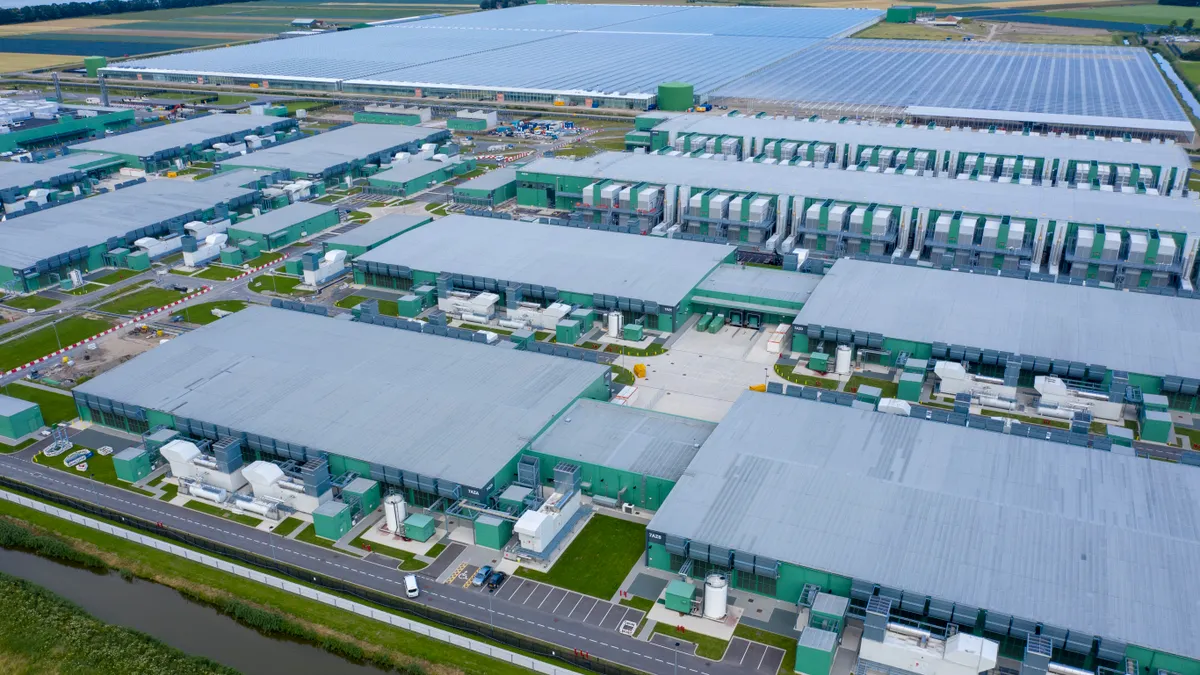
An example of the first scenario could be an AI data center running on emissions-free energy but spurring water use, infrastructure or other challenges, while the latter could be a company developing a renewable gas with no network ready to distribute, according to Mihailescu Cichon.
The RepRisk VP said a company’s lack of transparency “exposes [it] to reputational risk, to greenwashing claims, and then the banks and asset managers who invest in [them] as well.”
The financial services industry was the sector with the most companies linked to greenwashing incidents, with 305 companies linked, accounting for 15.6% of all sector linkages; banks were the eighth-most linked sector. Collectively, the sectors accounted for 1 in 5 of all linkages documented in the report. RepRisk said in its report that “Financial Services has been the most exposed sector throughout the five-year period, while Banks have consistently ranked among the top ten.”
This was the first year that impacts on ecosystems and biodiversity were a larger environmental greenwashing issue than climate change, greenhouse gas emissions and global pollution. The report documented 300 biodiversity-related issue linkages in 2026, compared to 275 on climate, emissions and pollution. Biodiversity-related issue linkages increased by over 41%, from 216 in 2025, while climate issues stayed roughly flat from the 271 documented in 2025.
“Biodiversity and nature has definitely moved up the investor regulatory and corporate agenda over the last few years,” Mihailescu Cichon said. “At the same time, it's more complex. … It's harder to measure than climate.”
The number of greenwashing incidents and companies linked to such incidents has fallen just once since RepRisk began its annual report, in 2024. Despite the number of greenwashing-linked companies falling for that year, the issue has consistently increased in severity since, according to RepRisk.
“For investors and lenders, greenwashing risk is becoming more complex as well as more serious,” the report said. “Assessing it means looking beyond the number of incidents to their severity, a company’s history, and whether exposure reflects a recurring pattern or an emerging risk.”