Dive Brief:
- Frontier Climate — the carbon removal purchasing group backed by Stripe, Google, Shopify and others — announced Thursday that it and carbon removal company 44.01 reached an offtake deal that will store carbon dioxide as rocks through a process called in-situ mineralization.
- Under the agreement, Frontier’s buyers will pay $11.7 million for 44.01 to remove and store 20,932 tons of carbon dioxide between 2028-2031, according to an Oct.15 Frontier blog.
- Outside of funding research and development projects for marine carbon removals, the deal with 44.01 is only the second offtake agreement of the year for Frontier, according to its portfolio.
Dive Insight:
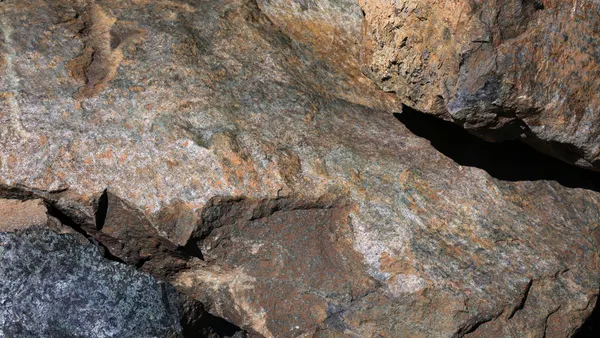
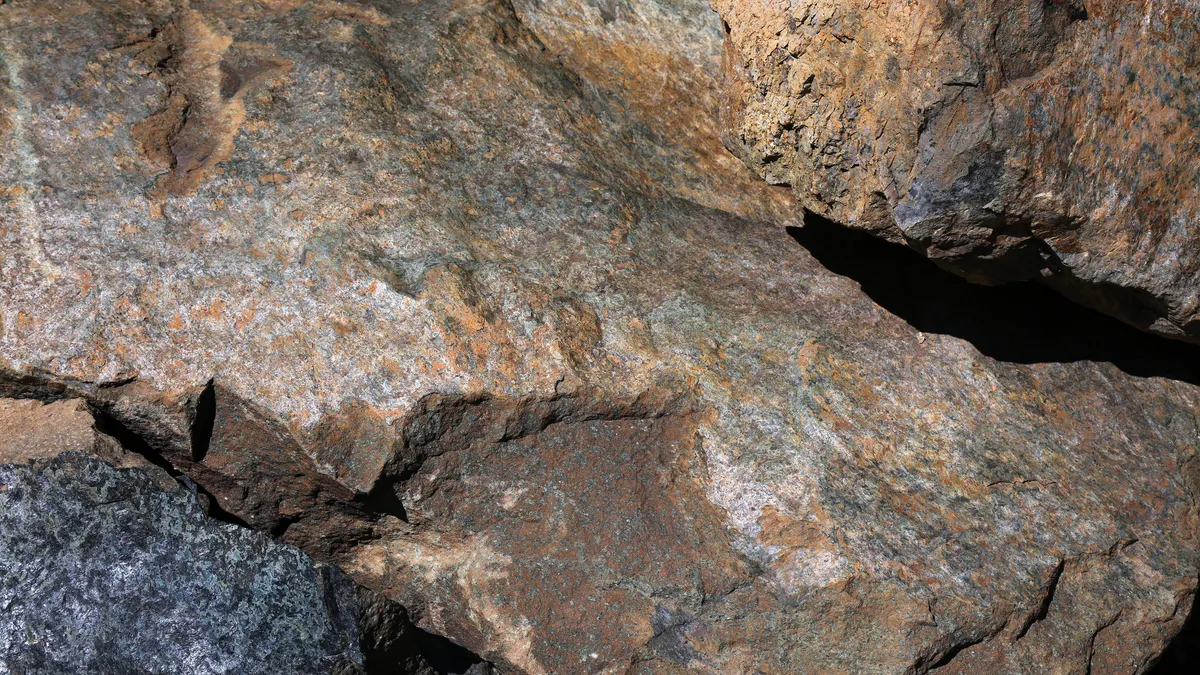
This is Frontier Climate’s first foray into in-situ mineralization as a carbon removal pathway. 44.01’s in-situ mineralization process is a five-step process: The company gets biogenic carbon dioxide from a wastewater treatment facility that produces biogas, dissolves the carbon dioxide in water and injects it underground into a magnesium-rich rock that “readily reacts with dissolved” carbon dioxide. From there, the carbon dioxide turns to rock over 1-3 years and the removal is measured and verified, according to a rundown of the process in Frontier’s release.
Currently, most removed carbon dioxide is compressed into a liquid and stored in geologic formations, but “there are many locations where CO2 could be captured but there is no feasible and cost-effective geologic storage available,” Frontier said in a primer on in-situ mineralization as a carbon removal pathway. Operational sites for in-situ mineralization store less than 50,000 tons of carbon dioxide annually, but the rock formations the process targets could potentially store 5 billion tons of carbon dioxide or more annually, the primer said, citing the Rocky Mountain Institute.
“Where we can store CO2 shouldn’t limit where we can remove it,” Frontier Head Hannah Bebbington Valori said in a Thursday press release from 44.01. “In-situ mineralization could expand the storage map, making permanent storage practical in places conventional storage can’t economically reach.”
44.01 will use the funding from the offtake agreement to try to make its process “more efficient, reliable, and repeatable,” Chief Technology Officer Ehab Tasfai said on LinkedIn Thursday. The company will look to expand its systems’ ability to handle multiple carbon dioxide streams, improve its injections, reduce the water and energy used by the process and use AI with remote monitoring “to better understand subsurface behaviour and optimize operations,” its CTO said.
Frontier Climate launched in 2022 as an advance market commitment to purchase $1 billion in carbon removals by 2030. The buyers group added Anthropic, the artificial intelligence company behind Claude, to its consortium of carbon removal buyers over the summer and announced that it would commit to buying an additional $915 million in carbon removals, bringing its collective commitment to $1.8 billion.
Frontier buyers participating in the purchase included Google, Stripe, Shopify, Autodesk, H&M and Workday, according to 44.01’s release. Google Head of Carbon Removal Randy Spock said on LinkedIn that investing in in-situ mineralization will help “unlock a durable CO2 storage pathway” and provides for the potential to scale up.
“Storage is a potential future bottleneck for scaling carbon removal that [in-situ mineralization] can help ease,” Spock said in a post Thursday. “The rock formations that 44.01 is targeting sit on every continent, and offer storage capacity for smaller-scale and distributed plants around the world.”