Dive Brief:
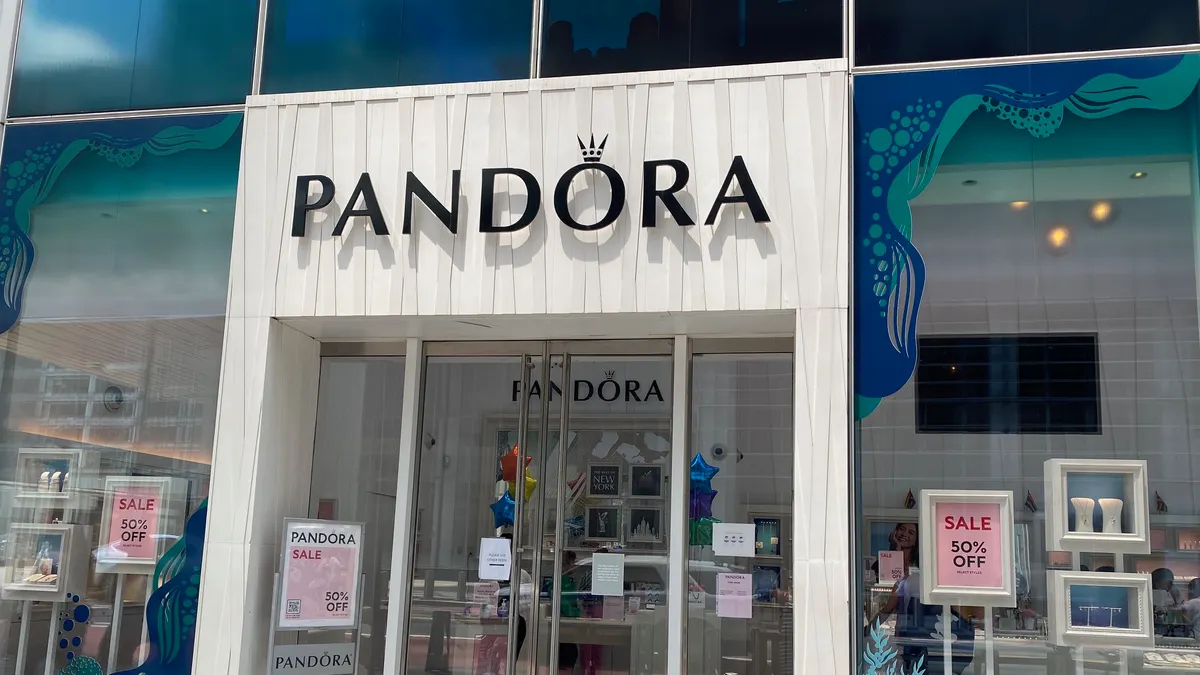
- Pandora will now include the carbon footprint of every lab-grown diamond it sells as part of the product information provided to customers, the company announced Wednesday.
- The new carbon footprint labeling will disclose all the emissions generated during the lab-diamond production process, beginning from the raw materials used to grow the diamond to the point it is cut and polished, according to the jewelry maker.
- Pandora said in a May 6 release that the label would provide its customers with an additional point of comparison — alongside traditional criteria for diamonds like cut, color, clarity and carat — and give further insight into the climate impact of the jewelry they purchase.
Dive Insight:
The Danish retailer — known for making contemporary jewelry, especially its signature charm bracelets — said the carbon footprint of its lab-diamonds is around 90% lower than mined alternatives. Lab-grown or synthetic diamonds are chemically, physically and optically identical to natural diamonds, but are produced in controlled laboratory environments and generally considered a more affordable and sustainable alternative.
Pandora stopped using mined diamonds in 2021. The company now only uses lab-grown diamonds made with 100% renewable electricity and sets these in jewelry that is produced from recycled silver and gold, according to the release.
Pandora CEO Berta de Pablos-Barbier said the company makes its jewelry with “sustainability in mind,” and the carbon footprint labeling is a “response to increasing consumer expectations to sustainability.” She said the company would also share its methodology and findings with its peers to promote more transparency across the sector.
“As consumers demand greater knowledge of how their products are made, transparency is becoming a defining force for brands. We are happy to share our learnings with others,” she added in the release.
Pandora’s announcement came the same day the company released its first-quarter earnings results. The jewelry retailer’s lab-grown diamond revenue — which made up only 1% of total sales — was down 15% year-over-year in Q1.