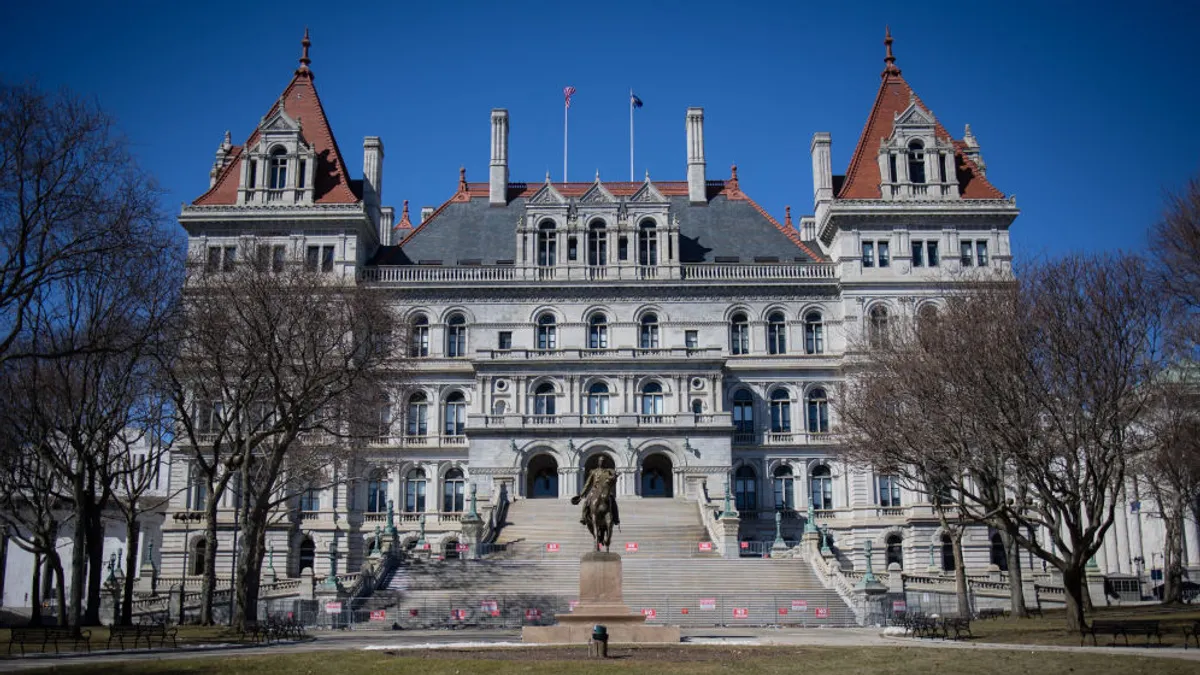
As the Trump administration reverses Biden-era federal climate policies, New York State — historically a vocal advocate of such laws — has introduced proposals and passed regulations in recent years that seek to hold corporations accountable for and disclose their carbon footprint.
Last year, it reintroduced a pair of bills that called for climate risk and emissions disclosures from large companies doing business in the state, with both bills generally aligned with the climate disclosure laws adopted by California in 2023. Earlier this year, the state senate approved the latest version of one of those bills — the Climate Corporate Data Accountability Act — which requires entities who do business or derive receipts from business activities in the state and generate over $1 billion in revenue in the prior fiscal year to annually disclose their direct and indirect greenhouse gas emissions.
Corporate disclosure laws aside, New York also committed to a target that sought a 40% reduction in statewide greenhouse gas emissions by 2030, compared to 1990 levels. The goal was introduced as part of the state’s 2019 Climate Leadership and Community Protection Act, which mandates statewide emissions reductions and a transition to clean energy. The law also requires New York to cut its emissions by 85% by 2050 compared to a 1990 baseline, meet 70% of its electricity needs through renewable energy by 2030 and to have 100% zero-emissions electricity by 2040.
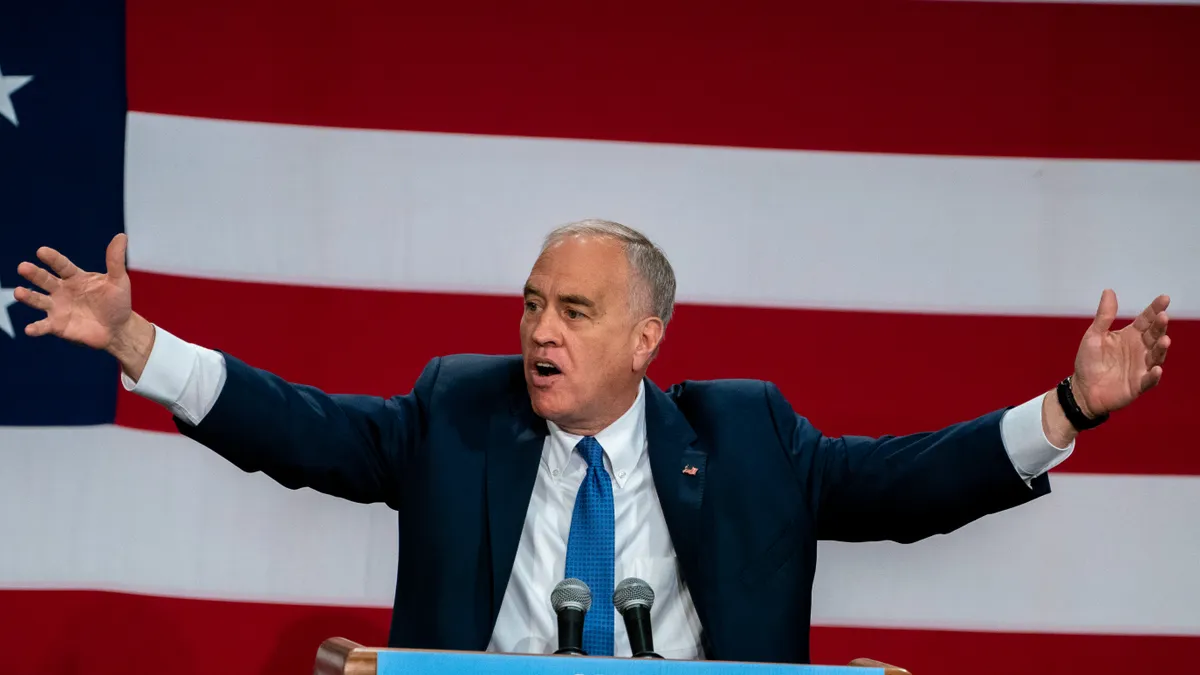
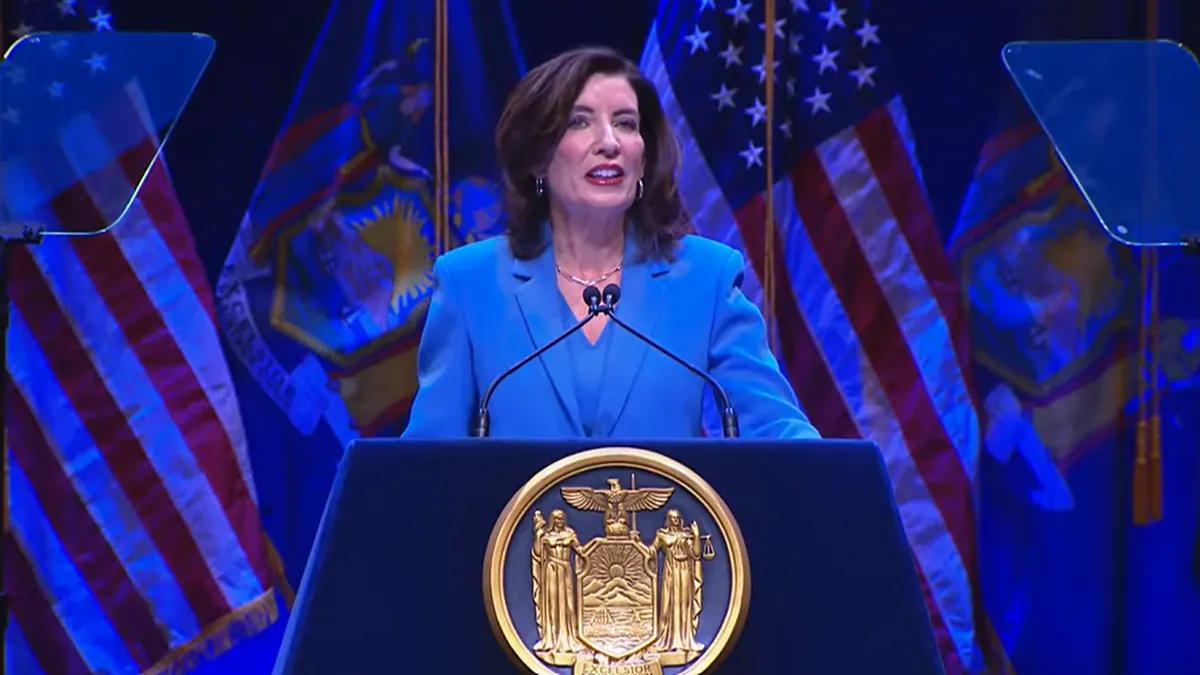
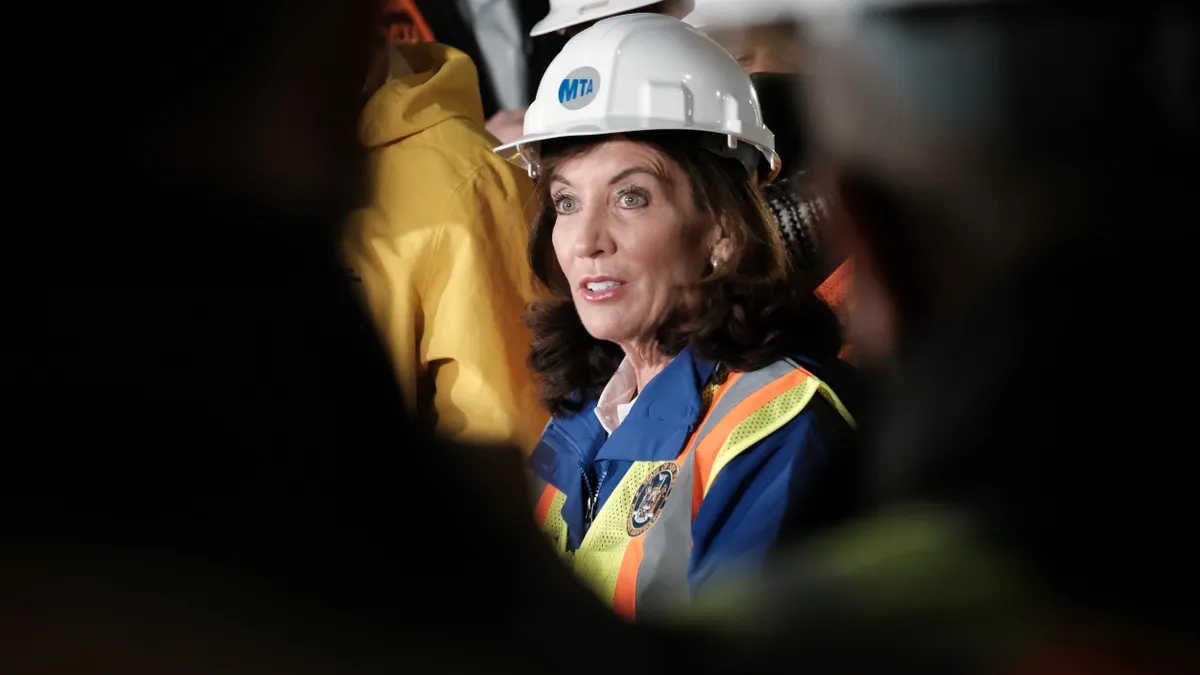
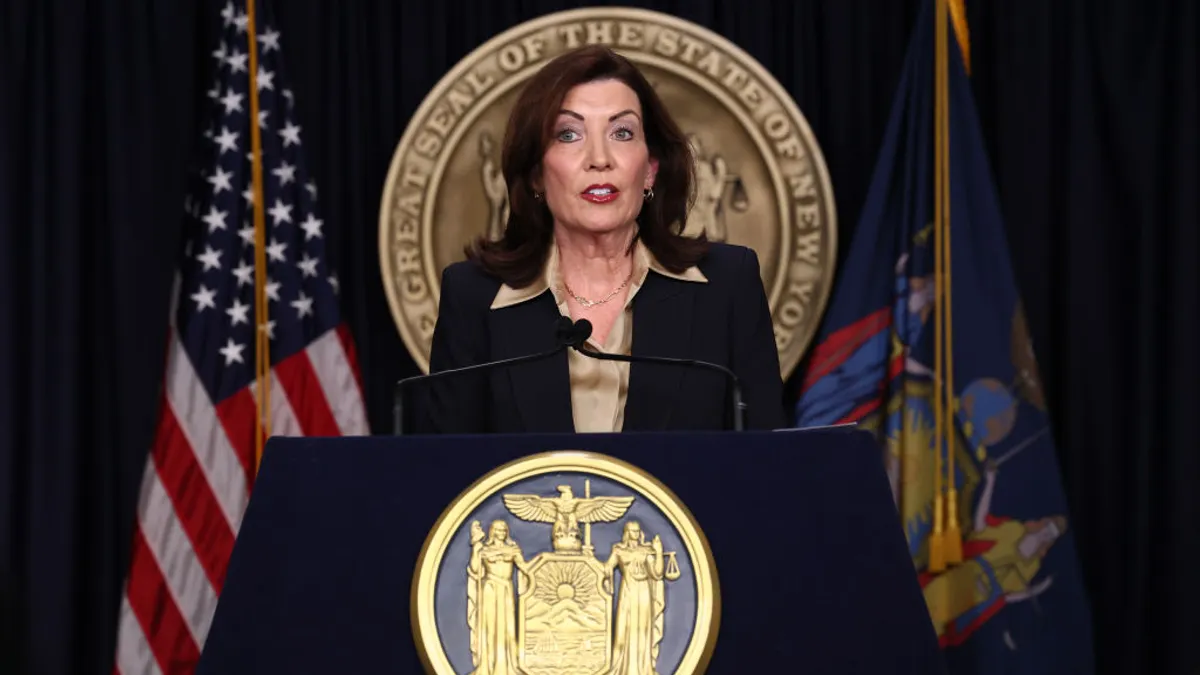
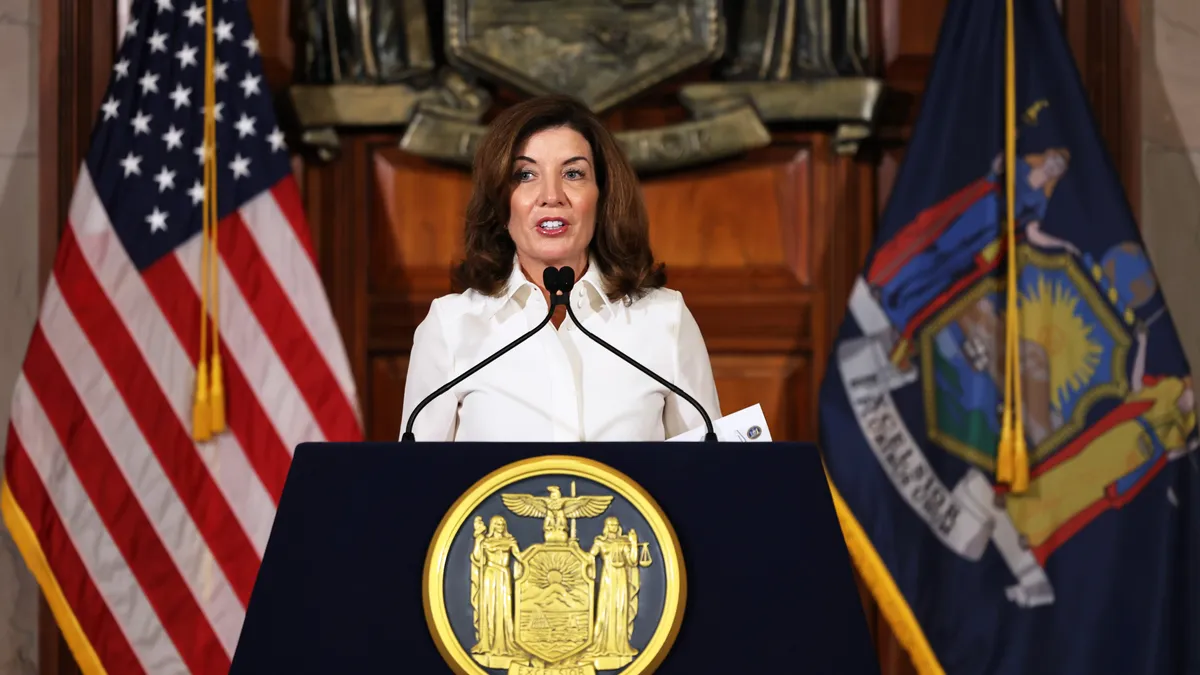
However, New York’s climate ambitions were hit with a reality check earlier this year when Gov. Kathy Hochul said the state needed some “breathing room” to meet the targets mapped out under the CLCPA. Hochul, who made the comments during a March summit, said at the time that New York’s ambitious sustainability goals have been impacted by a myriad of factors, including the COVID-19 pandemic, the offshore wind industry’s financial struggles since 2020, President Donald Trump’s opposition to renewable energy and the ongoing energy affordability crisis.
Shortly after, Hochul announced that New York State’s 2027 budget would roll back key elements of its landmark climate law, with the proposed changes including scrapping the 2030 emissions reduction target and replacing it with a target that seeks a 60% reduction in emissions by 2040.
The governor’s office told ESG Dive at the time that the budget will “avert the threat of major consumer cost increases,” while “continuing the state’s commitment to clean energy and climate.”
New York also recently became the first state in the U.S. to halt large data center construction for a year, as it considers the environmental and community costs of artificial intelligence.
You can catch up on our coverage of New York State’s climate-related developments here.