Dive Brief:
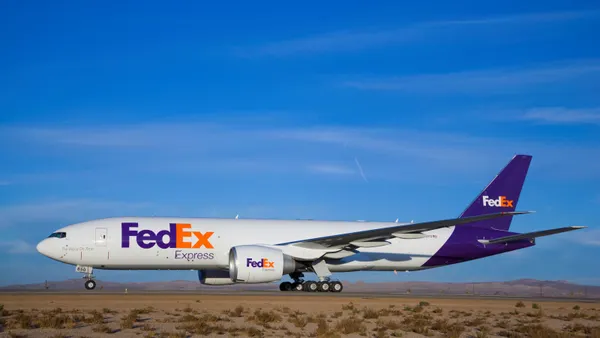
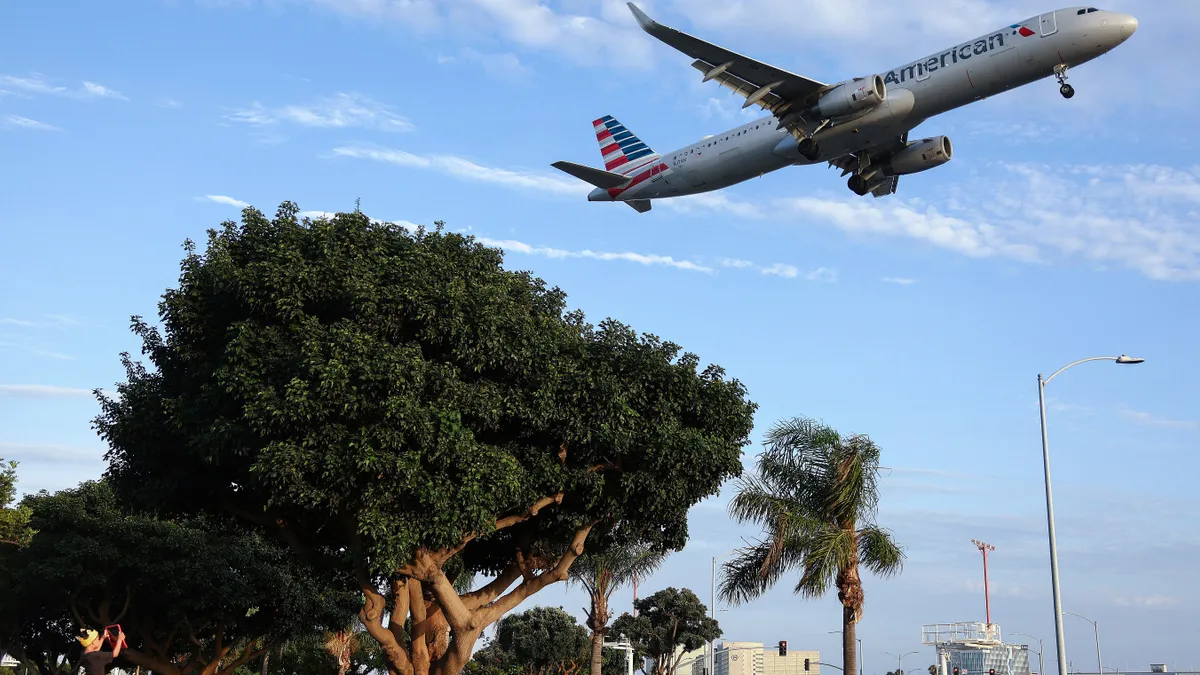
- American Airlines announced Thursday it had completed a commercial flight using electro sustainable aviation fuel, or eSAF. The airline said it was “the first delivery of SAF made without biobased feedstocks to a commercial airport in the U.S.”
- The fuel was provided by clean-tech and energy infrastructure company Infinium, which creates its SAF from waste carbon dioxide and renewable electricity. The fuel was blended and used for a flight within Texas, departing from Corpus Christi and landing in Dallas, according to a press release.
- The milestone comes as the global average price of SAFs is up 10% year over year in 2026, going for an average of $1,817 per metric ton, according to a BloombergNEF SAF price survey released July 27. The average price of eSAFs, like Infinium’s, was $5,015 per metric ton for delivery between 2026-2028, around seven times the price of conventional jet fuel, according to BNEF’s survey.
Dive Insight:
Electro sustainable aviation fuel is a specific type of SAF that is made from captured carbon dioxide and green hydrogen powered by renewable electricity. High quality eSAFs also offer over a 90% reduction in lifecycle carbon emissions compared to conventional jet fuel.
American Airlines received the eSAF from Infinium’s Pathfinder facility in Corpus Christi, which became the first commercial scale power-to-liquids e-fuels production facility when it opened in 2023. American Airlines CEO Robert Isom, who had previously rung the alarm on the sector’s decarbonization pace, called the flight “a significant moment for aviation.”
“Scaling SAF production at lower prices is essential to reducing emissions, strengthening our long-term competitiveness, and continuing to deliver the connectivity and economic benefits that our customers rely on,” Isom said in the release.
Infinium is also developing a separate facility, Project Pathfinder, that is under construction and expected to begin production in 2027. At full capacity, that plant is expected to produce over 5 million gallons of eSAF annually. American Airlines has a deal to receive commercial offtake volumes resulting from that facility, which is also backed by Citibank, HSBC, Breakthrough Energy Catalyst and Brookfield Asset Management, according to the Aug. 6 release.
In the airline’s latest sustainability report, Isom said the company’s “path to low-carbon aviation ultimately depends on scalable, renewable fuels.” American Airlines has a goal to replace 10% of its jet fuel usage with SAF by 2030, and Isom said in the July report that — despite its investments — the path to reaching it is “uncertain at best.”
“SAF remains the primary lever available to reduce life cycle greenhouse gas emissions from aviation,” American Airlines’ sustainability report said. “However, limited supply and persistently high costs continue to constrain its ability to scale at the pace required to support industry decarbonization ambitions.”
The commercial flight comes amid multiple SAF agreements and developments announced this summer. In June, American Airlines made a long term deal with Google and Valero that allowed the airline to purchase 35 million gallons of SAF from Valero and give Google the resulting SAF certificates from the three-year deal.
A Washington state-based SAF plant backed by Microsoft and Alaska Air Group also opened in June. E-fuels company Twelve will use the facility to create power-to-liquid e-fuels using captured carbon dioxide, water and renewable energy. Last month, Delta Air Lines and Shell announced a five-year agreement to expand SAF capacity and infrastructure across hubs in five states.
Sustainable aviation fuel accounted for just 0.6% of total jet fuel usage in 2025, according to the International Air Transport Association, even as production doubled. Growth of adoption is expected to slow, and SAFs are projected to meet 0.8% of total jet fuel usage this year, according to the IATA.